


Meet Kotor

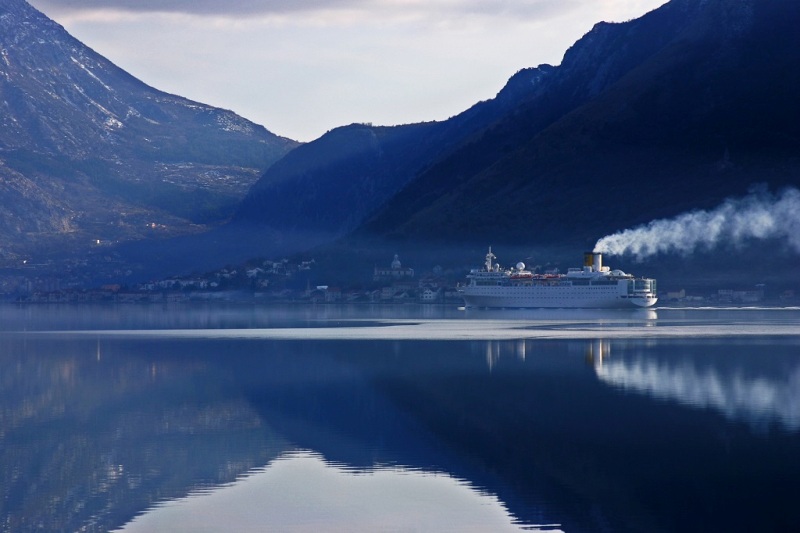
Due to its beauty, spaciousness and luxuriant relief, Boka Kotorska is one of the most interesting natural attractions of the Mediterranean. The sea drifted 20 miles to the land, creating two magical bays connected to the Verige Strait.
FROM HISTORY OF KOTOR
Surrounded by the mountains of Lovćen and the sea, Kotor is located at the very end of the Boka Kotorska Bay, officially one of the 25 most beautiful bays in the world. The time and place of its occurrence is not exactly established. The tradition connects Kotor with the ancient Acruvium, a town that mentions Pliny the Elder from the Age of the New Era. It was not yet established whether Acruvium was in the place of today's Kotor or somewhere in Grupa. The second assumption seems more credible. Thus, in all likelihood, the inhabitants of the city of Acruvium, due to the danger of swirling in the time of the immigration of peoples, moved to Catarum, a small settlement that was located in the area of today's city. In Byzantium sources the name of the town is Dekateron, from the time of humanism the name of the town is Ascrivium, the Italians is known as Cattaro. Today's name of Kotor is the Slovenian name of the ancient Catarum.
Kotor is located in a triangle that is bordered by the sea, the river Škurd and the hilly Sveti Ivan, at the top of which is the fortress of San Giovanni. The city has changed many authorities and administrations in its long history. It was ruled by Illyrians from the III century BC, when Romanians occupy the city until the fall of the Roman Empire in 476 BC. After that, Kotor enters the Eastern Roman Empire, ie Byzantium, and with short interruptions it remains until 1185. The Byzantine authority in Kotor interrupted in the middle of the XI century the administration of the Vojislavljević dynasty of the Dukes of Zvezda. The Byzantine power was re-established in the XII century until 1185, when Kotor became part of Raška - a medieval Serbian state governed by the Nemanjić dynasty. The Serbian administration lasts until 1371, when the town was occupied by the Hungarian-Croatian King Ludovik I. City in 1384 - 1391, the Bosnian King Tvrtko ruled. Kotor is then an independent city - republic from 1391 to 1420, when it is placed under the protection of the Venetian Republic, whose composition will remain until its fall in 1797. The first period of Austrian rule of the city lasts from 1797 to 1805, then the city is governed by Russia from 1806 to 1807. The French government in Kotor from 1807 to 1813. Following the fall of the French rule, the Provisional Reign of the two united Montenegro and Boka Kotorska Central Commissions was established, which lasted from 1813 to 1814. The second period of Austrian rule lasts from 1814 to 1918. After World War I, Kotor entered the Kingdom of Serbs, Croats and Slovenes, and from World War II in the Republic of Montenegro, one of the six republics of SFR Yugoslavia. Its disintegration Kotor remains in the SR of Yugoslavia, and from 2006 it will become part of the independent Montenegro.
From this brief overview of the administration of Kotor, it is possible to gain a picture of the dramatics of historical events in this area. What is also important to note here is that Kotor had a town administration in the Middle Ages who had more or less liberated the opportunities in the city.
A large number of political administrations, along with maritime affairs and trade, favored Kotor becoming the meeting place for many cultures. He accepted European Eastern and Western cultural patterns and united them in a unique way. Also, Kotor developed and maintained the spirit of harmonious coexistence of its Catholic and Orthodox inhabitants, which is also the basis for spiritual and cultural intercourse. The cultural heritage of Kotor is located on the UNESCO World Heritage List of Cultural and Natural Heritage.
KOTOR
The city is surrounded by strong forts, built in the time of the Vizantinians, Nemanjic and the Venetians, up to 20 meters wide, up to 10 meters. The old fortress on Mount Sveti Ivan (260 m) rises above the town. Bedemi Kotora are a unique example of fortification architecture in Europe.
Kotor has three doors. The gateway to the sea, restored in Renaissance style in 1555, leads to the city promenade and the coast; The river's doorway, restored in the same style of 1540 to commemorate the victory over the fleet of Hajredin Barbarose, leads to Risna and Herceg Novi; while the Gate of Gurdic, reestablished at the end of the XVII century, leads towards Trogir and at the crossroads of Cetinje - Budva.
The city is characterized by numerous features of a typical Mediterranean settlement: larger and smaller squares and narrow and curving streets. The largest and best architectural is the Trg of weapons, at the main door. There are several valuable old buildings on it: the Renaissance Prince's palace, to which there was a building in the early 19th century, one of the oldest venues in this area, a baroque clock tower from the 17th century. It is a beautiful square on which rises the Renaissance-Baroque palace Pima, with a terrace with two archives and the longest balcony on this Adriatic coast.
In the Grgurina palace there is a Maritime Museum, which contains a rich collection of old weapons, folk dances, models and paintings of highland sailboats and ships, and naval battles involving bareboat sailors. In the square in front of the cathedral is the Istrian archive of Kotor, whose oldest preserved document dates from 1326.
The most monumental monument of the cathedral / basilica of St. Tripuna, erected in 1166. There are 326 years before the discovery of America, from St. Paul's Church in London 544 years old, from Notre Dame in Prizse 69, from the Moscow Temple of Success 313, from the Basilica of Saint Peter to Rome in 460 years. Not only by its origins, but by its architectural solutions, decorative sculpture, the famous ciborium, fragments of frescoes from the 14th century - it represents a cultural and artistic monument of invaluable value.
The most important monuments are the Church of Saint Luke from 1195, the Church of Saint Mary (Blessed Ozane), restored in 1221, St. Paul's Church from 1266, the church of St. Clare, with a Franciscan monastery, in which a library of about 20,000 books is kept 50 incunabula, the oldest printed book by 1500.
The most important palates in Kotor are Buća (XIV century), Drago (XV), Pima (XVI), Vrakjena (XVIII) and Grubonja (XVII century) with a built-in coat of arms of the old kotor pharmacy, founded before 1326.
Source:
Kotor, City Guide, author Stevan Kordić, publisher "Dobro more", Kotor 2009;
Natural Beauties and Monuments of Culture, by Danilo Kalezić, published in monograph KOTOR, Graphic Institute of Croatia, Zagreb 1970.